
Rummy Sets & Rummy Card Set Rules
 By Akanksha Mishra
Feb 24, 2026
By Akanksha Mishra
Feb 24, 2026
Indian Rummy is one of those card games that feels simple from the outside but reveals layers of depth the moment you sit down to play. Whether you are someone who picks up cards at family gatherings during Diwali, or someone who plays regularly with friends, one thing remains true if you do not understand rummy sets and rummy card set rules properly, your chances of winning take a serious hit. Knowing what a set is, how to form one, when to use a Joker in it, and how sets work alongside sequences can completely change the way you approach the game. This guide is here to make all of that crystal clear.
What is a Set in Rummy?
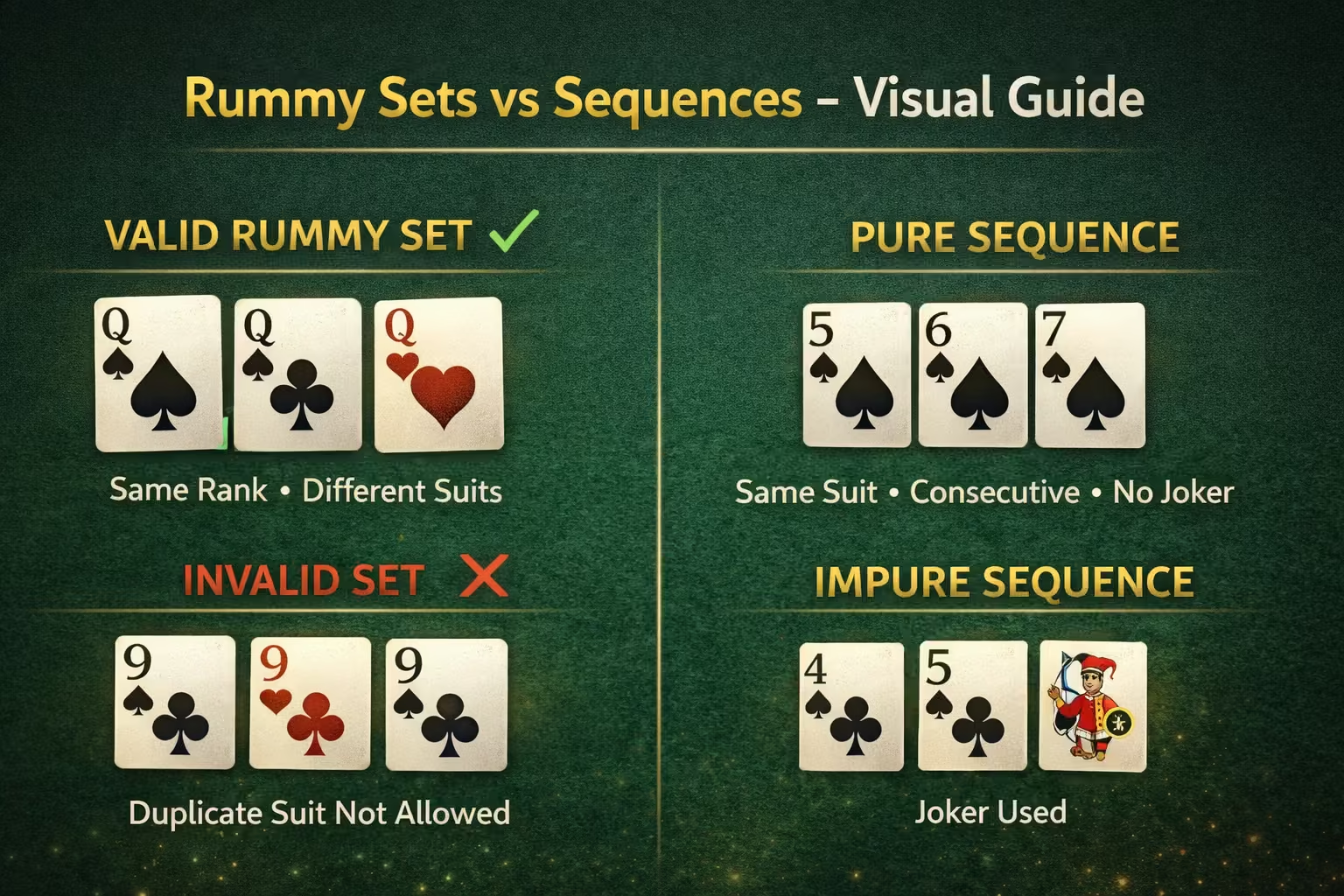
In rummy, a set is a group of three or four cards that share the same rank but belong to different suits. That is the most important rule to remember: same rank, different suits.
For example, a set of three Queens would look like ♦Q, ♣Q, ♥Q. A set of four Jacks would be ♦J, ♣J, ♥J, ♠J. Both of these are perfectly valid under rummy card set rules.
Here is where beginners tend to go wrong: two cards of the same rank cannot belong to the same suit within a single set. So ♦Q, ♦Q, ♥Q is not a valid set even though the ranks match the two Diamond Queens are from the same suit, which breaks the rule.
Valid Set Examples:
- ♦7, ♣7, ♥7 — a valid three-card set
- ♠K, ♦K, ♣K, ♥K — a valid four-card set
- ♥A, ♣A, ♠A — a valid three-card set with Aces
Invalid Set Examples:
- ♦9, ♦9, ♣9 — invalid, two cards from the same suit
- ♥5, ♥5, ♠5, ♣5 — invalid, repeated suit
Sets are one of the two building blocks of a winning rummy hand, the other being sequences. Without a properly formed set or sequence covering all 13 cards, a valid declaration is simply not possible.
Related Article:- 3 Patti Rules and Teen Patti Sequence – Complete Guide with Chart & Rankings
Types of Rummy Sets
There are two types of sets you will encounter during a game of Indian Rummy: sets without Jokers and sets with Jokers.
Set Without a Joker: This is the straightforward kind. Three or four cards of the same rank from different suits, with no Joker involved. For instance, ♦10, ♣10, ♥10 is a clean set of three 10s.
Set With a Joker: When you are missing one card to complete a set, a Joker either a printed Joker or a wild card Joker can step in as a substitute. For example, if you have ♠8 and ♦8 but are missing the ♣8 or ♥8, you can place a Joker in that spot: ♠8, ♦8, Joker. This is a valid set under rummy set rules.
The key thing to remember is that while Jokers are allowed in sets, there is no distinction between a “pure” or “impure” set the way there is for sequences. A set is a set — valid as long as it follows the rank and suit rules.
Rummy Set Rules You Must Know
The rules governing rummy sets are fairly specific, and missing even one of them can result in an invalid declaration. Here is a clear breakdown:
Rule 1 — Same Rank, Different Suits: Every card in a set must share the same face value (rank). A set of 6s must have all 6s. A set of Kings must have all Kings. And each of those cards must come from a different suit.
Rule 2 — Minimum Three Cards: You cannot declare a set with just two cards. A set must have at least three cards to be valid.
Rule 3 — Maximum Four Cards (Without Joker): Since a standard deck has four suits, the maximum natural set has four cards one from each suit. You can add a Joker to make it five cards only in certain game variations, but in standard Indian Rummy, four is the limit.
Rule 4 — No Duplicate Suits (in a 52-card game): In a single deck game, no two cards in the same set can belong to the same suit. In a two-deck game, some platforms allow one repeated suit, but this varies. Always confirm the rules of the platform or table you are playing at.
Rule 5 — Joker Substitution is Allowed: A printed Joker or wild card Joker can be used to replace any missing card in a set.
Also Read:- Unlock Free Chips Codes in Teen Patti Gold: Tips and Tricks
What is a Sequence in Rummy?
Sequences are just as important as sets in fact, they are even more critical, because a valid declaration in Indian Rummy requires at least one pure sequence. Without it, no matter how beautifully your sets are formed, your declaration will be rejected.
A sequence is a group of three or more consecutive cards of the same suit. There are two kinds:
Pure Sequence: A pure sequence is formed with consecutive same-suit cards and no Joker is used. For example, ♠5, ♠6, ♠7 is a pure sequence. So is ♥9, ♥10, ♥J, ♥Q. These are sometimes called “life” by experienced players, and for good reason they are your lifeline in the game.
Impure Sequence: An impure sequence includes one or more Jokers standing in for missing cards. For example, ♣4, ♣5, Joker where the Joker is replacing ♣6. Or ♦J, Joker, ♦K — where the Joker replaces ♦Q. These are valid sequences, but they cannot count as your mandatory pure sequence.
Every valid declaration needs at least two sequences, one of which must be pure. The remaining cards can be arranged in sets or additional sequences — pure or impure.
The Role of the Ace in Rummy Sets and Sequences
The Ace card creates confusion for a lot of players, especially beginners. The good news is that the rule is straightforward once you understand it.
In rummy, the Ace can be used as both a low card and a high card but never both in the same sequence.
Ace as Low: ♣A, ♣2, ♣3 is a valid pure sequence. Here, Ace acts as the card below 2.
Ace as High: ♥Q, ♥K, ♥A is also a valid pure sequence. Here, Ace acts as the highest card above King.
Invalid Use: ♦K, ♦A, ♦2 is not a valid sequence. You cannot use Ace in the middle of a run, wrapping around from King to 2. That kind of circular combination is not accepted in Indian Rummy.
In sets, the Ace behaves like any other card — ♥A, ♣A, ♦A is a perfectly valid set of three Aces. Just remember that in sequences, its placement matters.
How Jokers Work in Rummy Sets
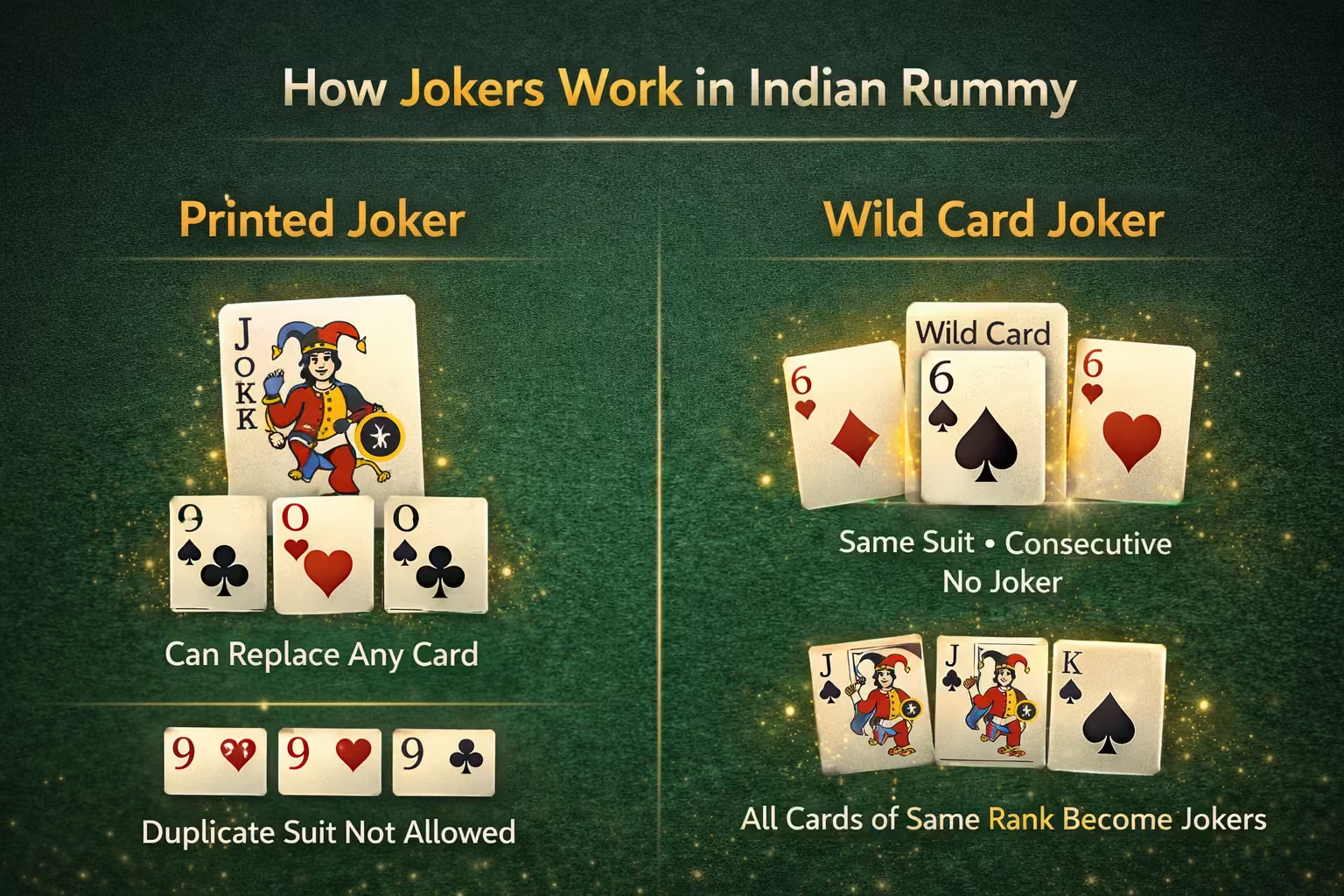
Jokers are the most exciting cards in any rummy hand. Landing a Joker early in the game feels like finding a shortcut and in many ways, it is. But using them wisely is a skill in itself.
There are two types of Jokers in Indian Rummy:
Printed Joker: This is the standard Joker card that comes in every deck. It can substitute for any missing card in both sets and sequences.
Wild Card Joker: At the start of every game, a random card is drawn from the deck and declared the wild card Joker for that round. For example, if the ♠6 is chosen as the wild card, then all 6s — ♦6, ♣6, ♥6 — become wild card Jokers for that game. They can replace any missing card.
Using Jokers in Sets:
- ♣9, ♥9, Joker valid set, Joker replaces the missing ♦9 or ♠9
- ♠J, ♦J, Wild Joker valid set, wild card completes the group
The golden rule: save your Jokers for high-value cards. If you have a King and Queen from the same suit but no Jack, using a Joker to complete that sequence saves you 10 penalty points. Wasting a Joker on a low-value 3 or 4 is not great strategy. More on that in the tips section.
How to Form a Valid Rummy Declaration Using Sets
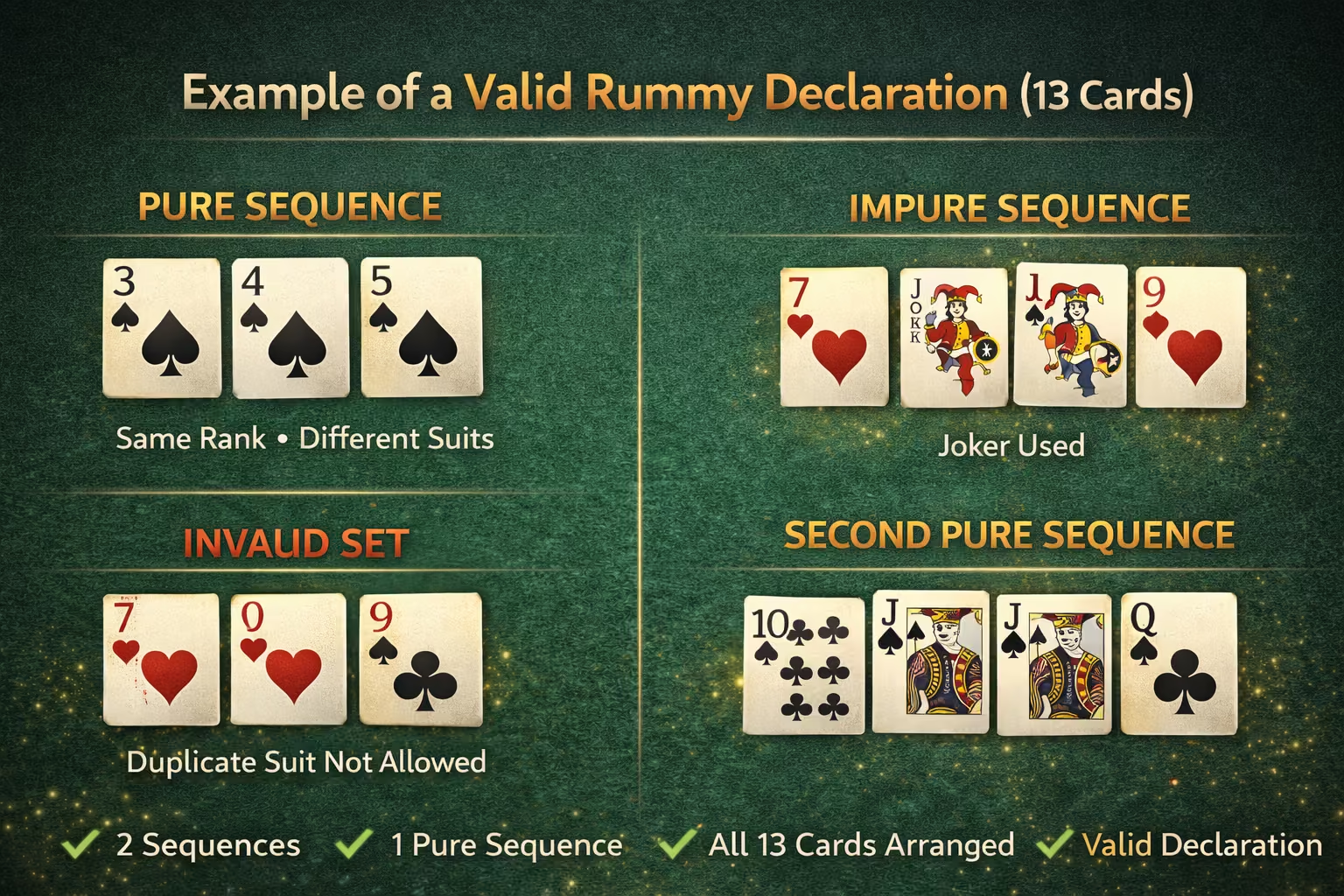
A lot of players know the individual pieces but struggle to put them all together at the moment of declaration. Here is exactly what a valid declaration looks like:
Minimum Requirements:
- At least two sequences total
- At least one of those sequences must be a pure sequence (no Joker)
- All remaining cards must be in valid sets or sequences
Full Example of a Valid Declaration (13 Cards):
- Pure Sequence: ♠3, ♠4, ♠5
- Impure Sequence: ♥7, Joker, ♥9
- Set: ♦K, ♣K, ♥K
- Second Pure Sequence: ♣10, ♣J, ♣Q
This arrangement checks all the boxes. Two sequences are present (one pure, one impure), one valid set is formed, and all 13 cards are accounted for. This is a winning declaration.
If even one of those groups is invalid say the set has two cards from the same suit, or the pure sequence unknowingly includes a wild card the declaration will be rejected. This is why double-checking before declaring is so important.
Also Read:- Top 5 Card Games to Play Online in India
Common Mistakes While Forming Rummy Sets
Even experienced players slip up sometimes. Here are the most common rummy set errors to watch out for:
- Same Suit Error: Placing two cards of the same suit in one set, like ♦8, ♦8, ♠8. In a single deck game, this is never valid. In a two-deck game, confirm the house rules before assuming it is allowed.
- Declaring Without a Pure Sequence: This is the most costly mistake. If all your sequences use Jokers, your declaration is invalid and the penalty is all the unmatched points in your hand added up together.
- Incorrect Ace Placement: Forming ♠K, ♠A, ♠2 as a sequence will get your declaration rejected. The Ace cannot simultaneously act as high and low within one sequence.
- Using Too Many Jokers in One Combination: While you can use Jokers, stacking two or more Jokers into a single set or sequence rarely makes strategic sense unless absolutely necessary.
Why Forming Sets Early Reduces Your Points
Here is something that many beginners overlook: in Indian Rummy, even if you do not win the round, a well-managed hand can significantly reduce your penalty points.
The point values in Indian Rummy work like this face cards (J, Q, K) and the Ace each carry 10 points. Number cards carry points equal to their face value. So a 7 is worth 7 points, a 3 is worth 3 points, and so on. Jokers carry zero points.
If you have a completed set like ♦Q, ♣Q, ♥Q and your opponent declares before you, those cards are already in a valid group and are not counted against you. But if those three Queens are sitting unmatched in your hand when someone else wins, you are paying 30 penalty points for them.
This is why smart players work on completing sets and sequences as early as possible not just to win, but to protect themselves from heavy penalties if someone else wins first.
Also Read:- How to Get Free Unlimited Chips in Ultimate Teen Patti?
Smart Tips to Form Rummy Sets Faster
1. Lock Down Your Pure Sequence First Before thinking about sets or impure sequences, focus on forming your mandatory pure sequence. Once that is secured, your hand is protected from the maximum penalty, and you can strategically use Jokers for everything else.
2. Discard High-Value Unpaired Cards Early If you are holding a King or Queen that has no pairing potential with the other cards in your hand, discard them early. Holding onto unmatched high-value cards for too long is one of the fastest ways to accumulate penalty points.
3. Middle Cards Are Your Best Friends Cards like 5, 6, 7, 8 are extremely flexible. A 6 of any suit can potentially form a sequence with 4-5, 5-7, or 7-8 of the same suit. High cards and Aces have far fewer combination options. Prioritise mid-range cards when building your hand.
4. Watch What Your Opponents Discard The discard pile is a gold mine of information. If your opponent throws away a King of Spades and you have two other Kings ready, picking it up completes your set. But more importantly, if you notice they are consistently discarding a particular suit, it tells you those cards are likely safe to discard yourself.
5. Use Jokers Wisely, Not Desperately The most effective use of a Joker is to plug a gap involving a high-value card. Completing a set or sequence that saves you 10+ points is always a better use than completing one that saves you 3 or 4 points.
Get Bicycle Cards for a More Enjoyable Rummy Experience
The quality of your playing cards matters more than most people realise. When you are tracking 13 cards across sets and sequences, trying to spot combinations quickly, worn-out cards with bent corners or faded prints create unnecessary friction. Art of Cards offers premium playing card decks like Bicycle Aureo, Bicycle Aviary, Bicycle Fyrebird, Bicycle Sea King, Bicycle Dark Mode, and the stunning Bicycle Stargazer series each crafted for smooth shuffling, crisp readability, and a premium feel in the hand. Whether you are hosting a rummy night at home or playing at a regular table, the right deck makes every round more enjoyable.
Mastering Rummy Sets is the First Step to Winning Consistently
Indian Rummy is a game of skill, patience, and sharp observation. And at the heart of every winning hand is a clear understanding of rummy sets and sequences how they are formed, when to use Jokers, how to avoid the common traps, and how to build a hand that is always in a strong position whether you declare first or not.
Form your pure sequence early. Build your sets smartly. Watch the discard pile closely. And play with cards that make the experience worth it. With rummy card set rules firmly in mind and a good deck in hand, you are already ahead of most players at the table.
Also Read:- Unlock Wins with Exclusive Redeem Code for Octro Teen Patti Chips