Card games have always been a big part of Indian culture. Whether it’s a family gathering during
Diwali or a lazy Sunday afternoon with friends, shuffling cards and testing your luck (and skills) is
something we’ve all enjoyed.
But times have changed. Today, you don’t need a physical deck or a group of friends sitting around a
table. Online card games have taken over, bringing the same excitement, strategy, and fun right to
your smartphone or laptop.
India has seen a massive rise in online gaming platforms offering classic card games alongside global
favourites. From quick 5-minute games to intense tournaments, there’s something for everyone.
In this guide, we’ll walk you through the top 5 card games to play online in India.
Whether you’re a complete beginner or someone looking to explore new games, this list will help you
find the right fit.
Why Card Games Are So Popular
in India
Card games aren’t new to us. They’ve been part of our celebrations, festivals, and casual hangouts
for generations. But what makes them so popular, especially online?
Cultural Connection
Games like Teen Patti and Rummy aren’t just games—they’re traditions. Playing Teen Patti during
Diwali is as common as lighting diyas. This cultural familiarity makes it easy for people to
transition from offline to online platforms.
Easy Access
All you need is a smartphone and an internet connection. No need to gather people physically or carry
a deck of cards. You can play anytime, anywhere—whether you’re commuting, taking a break, or relaxing
at home.
Social and Competitive Fun
Online platforms let you compete with real players from across the country. The thrill of outsmarting
opponents, climbing leaderboards, or winning a tournament keeps players hooked.
Real-Money Gaming
Many platforms offer cash games and tournaments where you can win real money. This adds an extra
layer of excitement (though it’s important to play responsibly).
Variety of Choices
From traditional Indian games to international favourites like Poker, online platforms offer a range
of options. You can switch between games based on your mood, skill level, or time availability.
Skill-Based vs Luck-Based Card Games: What’s the Difference?
Before we jump into the top games, it’s important to understand one key distinction:
skill-based vs luck-based games.
Skill-Based Games
These are games where your decisions, strategy, and experience matter more than the cards you’re
dealt. Examples include Rummy and Poker.
In skill-based games:
You need to think ahead
Memory and calculation help
Experience improves your winning chances
Long-term success depends on how well you play, not just luck
Legal Note: In India, skill-based games are legally recognized and allowed in most
states because they involve mental effort and strategy.
Luck-Based Games
These games rely heavily on chance. Your decisions have minimal impact on the outcome. Andar Bahar is
a classic example.
In luck-based games:
Outcomes are mostly random
Easy to learn and play
Great for casual fun
Less about strategy, more about entertainment
Why Does This Matter?
If you’re someone who enjoys learning, improving, and applying strategy, go for skill-based games. If
you want quick entertainment without much thinking, luck-based games are perfect.
Game Type
Example
Winning Factor
Best For
Skill-Based
Rummy, Poker, Call Break
Strategy, experience, decision-making
Serious players
Luck-Based
Andar Bahar
Random chance
Casual players
Balanced
Teen Patti
Mix of skill and luck
Everyone
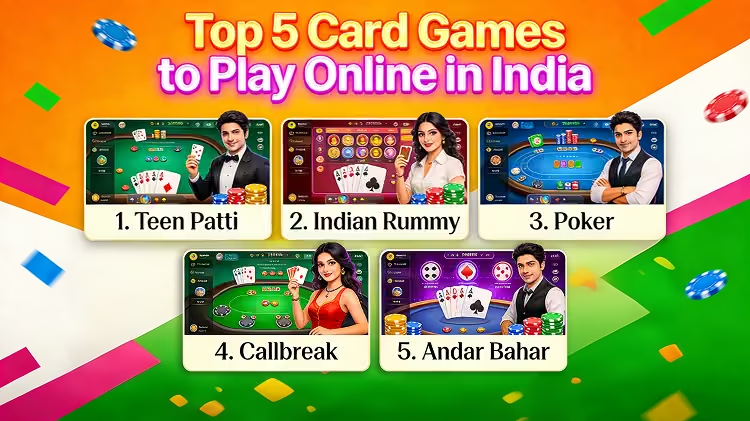
Top 5 Card Games to Play
Online in India
Now let’s get to the main event—the games that dominate the Indian online card-gaming scene.
1. Teen Patti – The King
of Indian Card Games
If there’s one card game every Indian knows, it’s Teen Patti. Also called “Flash” or “Flush” in some
regions, Teen Patti is the desi version of poker and has been played in Indian households for decades.
What is Teen Patti?
Teen Patti literally means “three cards” in Hindi. It’s a simple yet thrilling game
where each player is dealt three cards, and the goal is to have the best hand or convince others you
do.
The game is usually played during Diwali and other festivals, making it deeply connected to Indian
culture.
How to Play Teen Patti
Here’s a quick breakdown:
Each player gets 3 cards face down
There’s a boot amount (starting bet) in the pot
Players can choose to play “blind” (without seeing cards) or “seen” (after looking at cards)
Betting rounds happen where players can bet, raise, or fold
The player with the best hand wins the pot
Common hand rankings (from highest to lowest):
Trail (three of a kind)
Pure Sequence (straight flush)
Sequence (straight)
Color (flush)
Pair
High Card
There are also popular variations like AK47, Muflis, and Joker, which add twists to the classic game.
Why Teen Patti is So Popular
in India
Cultural Familiarity: Most Indians have played Teen Patti at some point, so the
online version feels natural.
Easy to Learn: The basic rules are simple enough for beginners to pick up quickly.
Exciting Gameplay: The blend of luck and bluffing keeps every round unpredictable
and fun.
Social Element: Many online platforms offer multiplayer tables where you can chat
and interact with other players.
Huge Player Base: Since it’s so popular, you’ll always find tables and tournaments
running.
Skill vs Luck in Teen Patti
Teen Patti is a balanced game. Here’s how it breaks down:
Skill (60%):
Reading opponents and their betting patterns
Knowing when to bluff and when to fold
Managing your chips wisely
Understanding hand probabilities
Luck (40%):
The cards you’re dealt
What cards other players have
With practice, skilled players can consistently perform better than beginners, but luck still plays a
role in individual hands.
2. Rummy – A Classic
Skill-Based Card Game
Rummy is another household name in India. It’s not just popular—it’s also legally recognized as a
game of skill, which makes it a top choice for serious online players.
What is Rummy?
Indian Rummy (also called 13-card Rummy) is a melding game where players form valid sets and
sequences using 13 cards. The first player to arrange all their cards correctly wins.
One card is placed face-up as the open card (discard pile starts here)
Remaining cards form the closed deck
Players take turns drawing a card (from open or closed deck) and discarding one
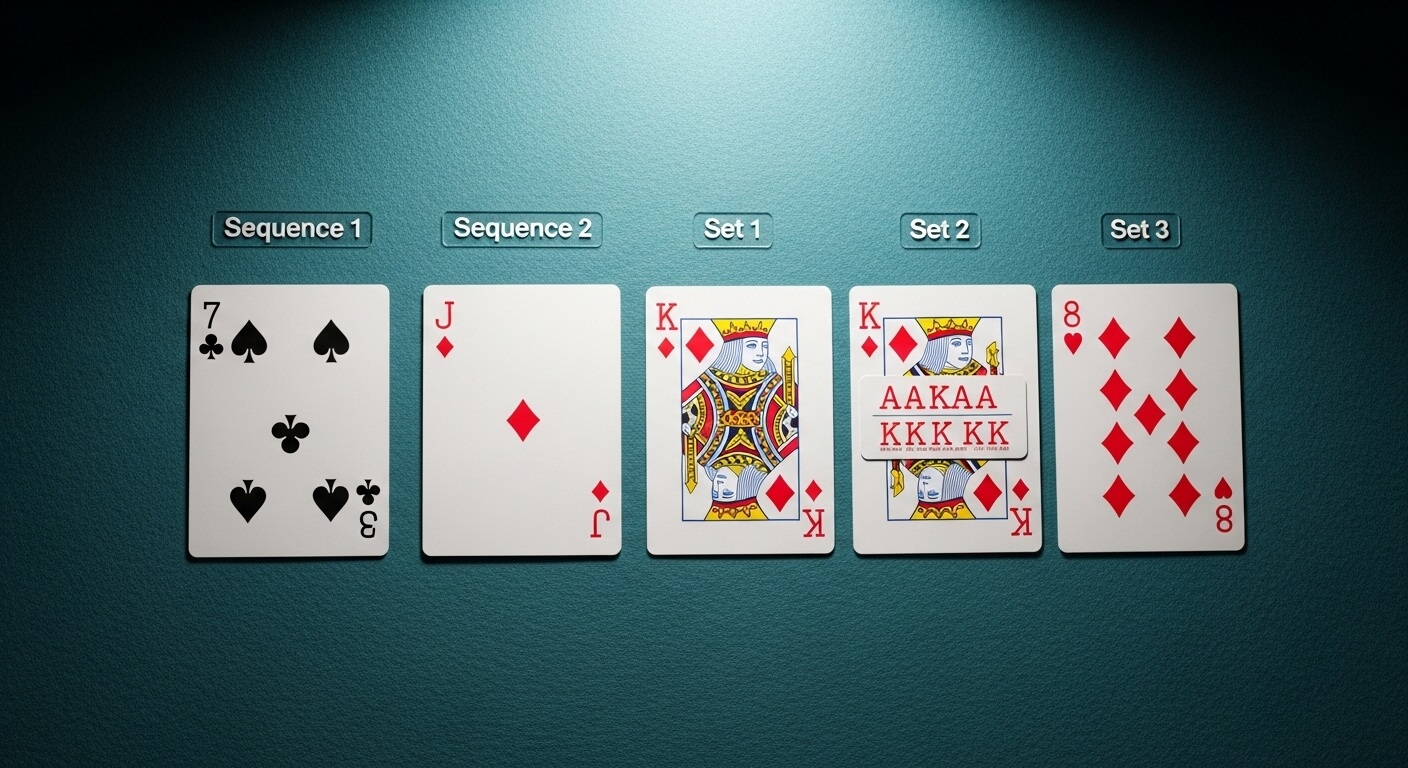
The goal is to form at least 2 sequences (one must be pure) and the remaining cards in sets or
sequences
First player to declare with valid cards wins
Key Terms:
Pure Sequence: Three or more consecutive cards of the same suit (no joker)
Impure Sequence: Sequence with a joker
Set: Three or four cards of the same rank but different suits
Why Rummy is Popular in India
Skill-Based Recognition: Since Rummy is considered a game of skill, it’s legal in
most Indian states, giving players confidence to play for real money.
Fast-Paced Rounds: A typical Rummy game takes 5-10 minutes, making it perfect for
quick sessions.
Tournaments and Cash Prizes: Major platforms host daily tournaments with attractive
prize pools.
Mental Exercise: It’s not just fun—it sharpens your memory, focus, and analytical
skills.
Wide Availability: Almost every major card-gaming platform in India offers Rummy.
Skill vs Luck in Rummy
Rummy leans heavily toward skill:
Skill (70%):
Arranging cards efficiently
Remembering discarded cards
Calculating probabilities of drawing useful cards
Deciding when to declare
Luck (30%):
Initial card distribution
Which cards you draw from the deck
Over time, skilled players will almost always outperform beginners, making Rummy one of the best
games to master.
3. Poker – The
Global Phenomenon Winning Indian Hearts
Poker might have originated in the West, but it’s rapidly gaining popularity in India. Thanks to
online platforms and high-profile tournaments, more Indians are discovering the strategic depth of
this game.
What is Poker?
Poker is a family of
card games that combine strategy, psychology, and probability. The most popular variant in India is
Texas Hold’em, though Omaha is also gaining traction.
Unlike Teen Patti,
Poker has more complex betting rounds and deeper strategy layers.
How to Play Poker (Texas
Hold’em)
Here’s a simplified version:
Each player gets 2 private cards (hole cards)
Five community cards are dealt face-up in three stages:
Flop: First 3 cards
Turn: 4th card
River: 5th card
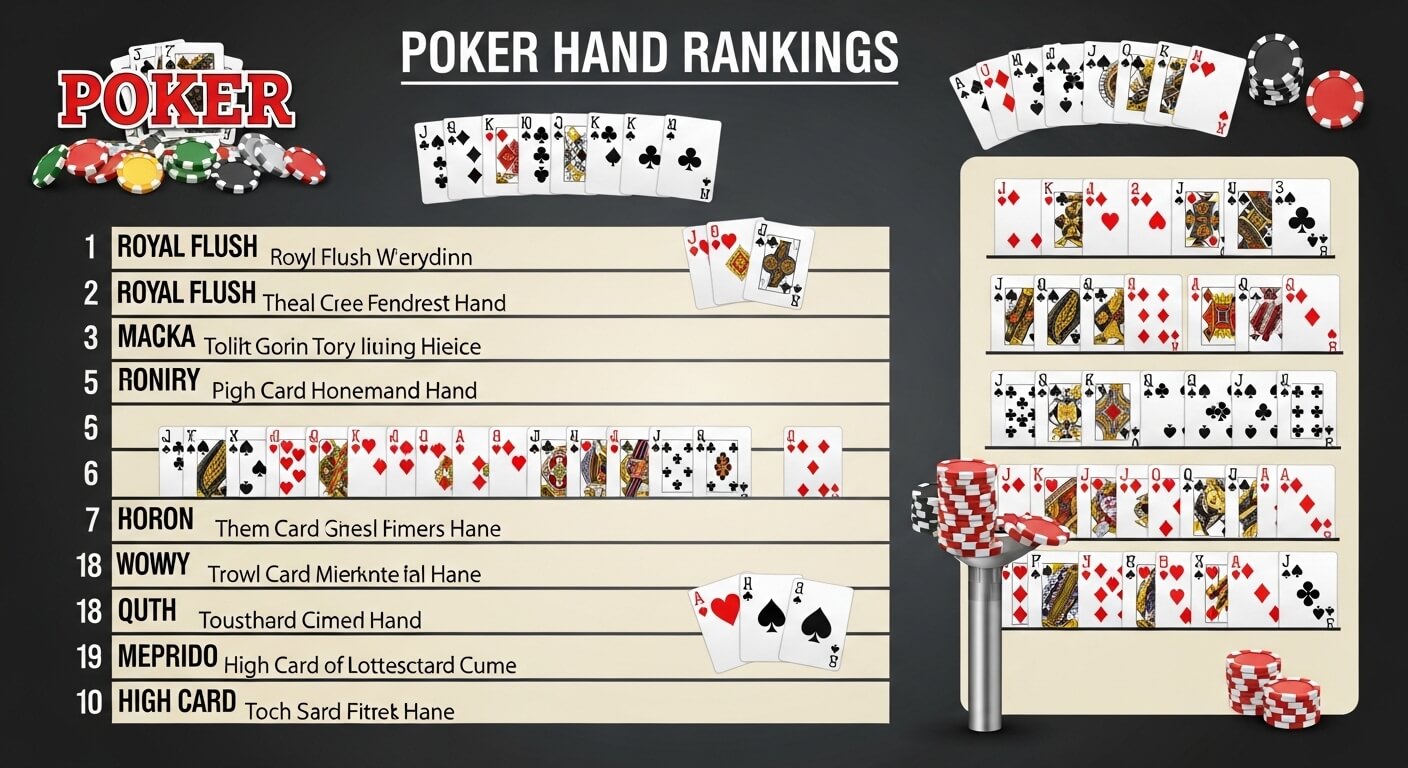
Players use their hole cards + community cards to make the best 5-card hand
In the short term (a single hand or session), luck matters. But over hundreds or thousands of hands,
skill dominates. That’s why professional players exist.
4. Call Break –
The Rising Star of Trick-Taking Games
Call Break might not be as famous as Teen Patti or Rummy, but it’s quickly becoming a favourite among
players who love strategic trick-taking games.
What is Call Break?
Call Break is a trick-taking card game similar to Spades. It’s especially popular in Nepal and parts
of North India. The game involves bidding, trump cards, and outsmarting your opponents.
It’s strategic, fast-paced, and incredibly satisfying when you hit your bids perfectly.
How to Play Call Break
Here’s the basic structure:
Four players are dealt 13 cards each
Spades are always the trump suit
Each player “calls” (bids) how many tricks they think they’ll win
Players take turns playing one card per trick
The highest card of the leading suit (or highest trump) wins the trick
Scoring:
If you meet or exceed your bid, you score points
If you fail to meet your bid, you lose points
The game is usually played over 5 rounds
Why Call Break is Popular in
India
Strategic Depth: Unlike simpler games, Call Break requires you to plan ahead and
count cards.
Quick Rounds: Each round takes 15-20 minutes, perfect for a quick gaming session.
Growing Online Community: More platforms are adding Call Break, attracting new
players.
Less Complex Than Poker: It offers strategy without the steep learning curve of
Poker.
Skill vs Luck in Call Break
Skill (65%):
Accurate bidding based on your hand
Trump management (when to use spades)
Counting cards played by opponents
Understanding probabilities
Luck (35%):
The cards you’re dealt
How cards are distributed among players
Call Break rewards experience and smart play, making it a great choice for players who want something
more challenging than Teen Patti but simpler than Poker.
5. Andar Bahar –
Simple, Fast, and Purely Entertaining
If you want pure entertainment without any learning curve, Andar Bahar is your game. It’s one of the
oldest and simplest card games in India—perfect for casual players.
What is Andar Bahar?
Andar Bahar (also called Katti) is a traditional Indian betting game. It’s incredibly simple: a card
is drawn, and you bet on which side (Andar or Bahar) the matching card will appear.
There’s no strategy, no complex rules—just pure chance and fast-paced action.
How to Play Andar Bahar
It’s straightforward:
The dealer draws a single card called the “joker” (not the playing card joker, just the first card
drawn)
Players bet on whether the matching card will appear on:
Andar (inside/left side)
Bahar (outside/right side)
The dealer starts placing cards alternately on Andar and Bahar
The first side to get a card matching the joker’s rank wins
Players who bet on that side win
That’s it. No hand rankings, no betting rounds, no decisions. Just place your bet and watch.
Why Andar Bahar is Popular in
India
Zero Learning Curve: Anyone can understand it in 30 seconds.
Super Fast Rounds: Each round takes 1-3 minutes.
High Entertainment Value: The simplicity and speed make it addictive.
Live Dealer Versions: Many online casinos offer live Andar
Bahar with real dealers, adding to the experience.
Cultural Nostalgia: It’s been played in Indian homes and street corners for
generations.
Skill vs Luck in Andar Bahar
Skill (10%):
Minimal betting strategy (betting patterns, but nothing significant)
Luck (90%):
The outcome is almost entirely random
Andar Bahar is all about fun and entertainment. Don’t expect to “master” it—just enjoy the ride.
Quick Comparison: Top
5 Card Games at a Glance
Here’s a handy table to help you decide which game suits you best:
Game
Skill %
Luck %
Difficulty
Avg Game Time
Best For
Teen Patti
60%
40%
Easy-Medium
10-15 min
Social players who love bluffing
Rummy
70%
30%
Medium
5-10 min
Strategy lovers seeking quick rounds
Poker
75%
25%
Hard
20-60 min
Serious gamers wanting deep strategy
Call Break
65%
35%
Medium
15-20 min
Trick-game fans who like planning
Andar Bahar
10%
90%
Very Easy
2-5 min
Casual players wanting instant fun
Which Card Game Should You
Play?
Still confused about where to start? Here’s a quick guide based on your preferences:
For Complete Beginners
Start with Teen Patti or Andar Bahar. Both are easy
to understand and don’t require much practice.
For Skill Development
Go with Rummy or Poker. These games will challenge you and improve
with practice.
For Quick Gaming Sessions
Try Call Break or Andar Bahar. Perfect when you have 10-15 minutes
to spare.
For Competitive Play
Poker and Rummy offer the best tournament scenes with real prizes
and rankings.
For Cultural Connection
Teen Patti is the most “Indian” game on this list. It’ll remind you of festive
gatherings and family fun.
The best part? You don’t have to choose just one. Try them all and see which ones you enjoy most.
Responsible Gaming: Play
Safe, Play Smart
Online card games are fun
and exciting, but it’s important to play responsibly. Here are some guidelines:
Set Limits
Decide beforehand how much time and money you’ll spend. Stick to it.
Play on Licensed Platforms
Always choose reputed, licensed platforms. Check reviews and do your research before depositing
money.
Treat It as Entertainment
Card games should be fun, not a source of income. Don’t chase losses or bet money you can’t afford to
lose.
Know When to Stop
If you’re feeling frustrated, stressed, or losing more than planned, take a break. Come back when
you’re in a better mindset.
Avoid Playing Under Influence
Never play when you’re drunk, upset, or distracted. Clear thinking is crucial.
Educate Yourself
Understand the rules, odds, and risks of each game before playing for real money.
Remember, the goal is to have fun and enjoy the game—not to let it control you.
FAQs
Q1: Which is the
most popular card game in India?
Teen Patti and Rummy are the two most popular card games in India.
Teen Patti dominates during festivals and social gatherings, while Rummy is favoured by players
looking for skill-based competition.
Q2: Are online card games
legal in India?
Yes, skill-based games like Rummy and Poker are legal in most
Indian states. However, laws vary by state, so it’s important to check local regulations before
playing for real money.
Q3: Can I win real
money playing card games online?
Absolutely. Many platforms offer cash games and tournaments where you can win real money. Just make
sure you play on trusted, licensed platforms and play responsibly.
Q4: Is Teen Patti a skill-based
game?
Teen Patti is a mix of both skill and luck. While the cards you’re dealt are random,
skilled players use betting strategy, bluffing, and opponent reading to win consistently.
Q5: Which card game is
easiest to learn?
Andar Bahar is the easiest card game to learn—it has no complex rules and takes less
than a minute to understand. Teen Patti is also beginner-friendly.
Q6: What’s the
difference between Teen Patti and Poker?
Teen Patti uses 3 cards and has simpler rules with less complex betting rounds.
Poker (especially Texas Hold’em) uses 5 cards, involves community cards, and has
deeper strategic layers with multiple betting rounds.
Q7: Can beginners play Rummy
online?
Yes! Most online platforms offer practice tables where beginners can learn without
risking real money. Many also have tutorials and guides to help you get started.
Q8: Which card game
requires the most skill?
Poker requires the highest level of skill. It involves mathematics, psychology,
position play, and long-term strategy. Professional Poker players dedicate years to mastering the
game.
India’s
Favourite
Card Game Lives On in Teen Patti Master
🪔 Teen
Patti
Master Brings the Classic Teen Patti Table to Your Screen
Feel like you're at a Diwali game night every time you open Teen
Patti Master.
🎲
All
Original Modes Are in Teen Patti Master
Joker, Muflis, AK47—Teen Patti Master preserves the authentic
ways
India loves to play.
💵 Win Like in the Old Days — Only on Teen Patti Master
Compete for real chips, climb ranks, and win money just like
traditional card games, now in Teen Patti Master.
🌐 Teen Patti Master
Connects Millions of Indian Card Lovers
Join crores of players who’ve made Teen Patti Master their go-to
online poker room.
Teen Patti, a popular card game originating in India, has taken the online gaming world by
storm. With its engaging gameplay and social aspects, playe...
Teen Patti, also known as Indian Poker, has captured the hearts of card enthusiasts across the
globe. Once confined to childhood gatherings and festiv...
Teen Patti, often referred to as Indian Poker, is an exhilarating and engaging card game that
has gained immense popularity around the world. With its...
Teen Patti, often referred to as Indian Poker, has surged in popularity across the globe,
especially among younger audiences. This classic card game, ...
Introduction to Teen Patti Teen Patti, often referred to as 'Indian Poker,' has captivated
players across the globe with its blend of strategy, luck, ...
The landscape of online gaming has shifted dramatically over the past decade, particularly with
traditional card games transitioning into robust onlin...
FAQs - Teen Patti Master
Q1: What is Teen Patti Master?
It’s an exciting online card game based on Indian Teen Patti. Play against
real
players and
win cash!
Q2: Is Teen Patti Master free?
Yes, it’s free to play! But you can also buy chips for more fun.
Q3: Can I play with friends?
Of course! Create private tables & invite your friends.
Q4: What’s Teen Patti Speed?
A faster version of Teen Patti for those who like quick games.
Q5: What’s the minimum age to play?
You must be at least 18 years old to play. Some places require
21+.
Q6: How do I start playing Slots Meta?
Download Slots Meta, create an account, and start spinning!

 By Akanksha Mishra
Feb 06, 2026
By Akanksha Mishra
Feb 06, 2026